
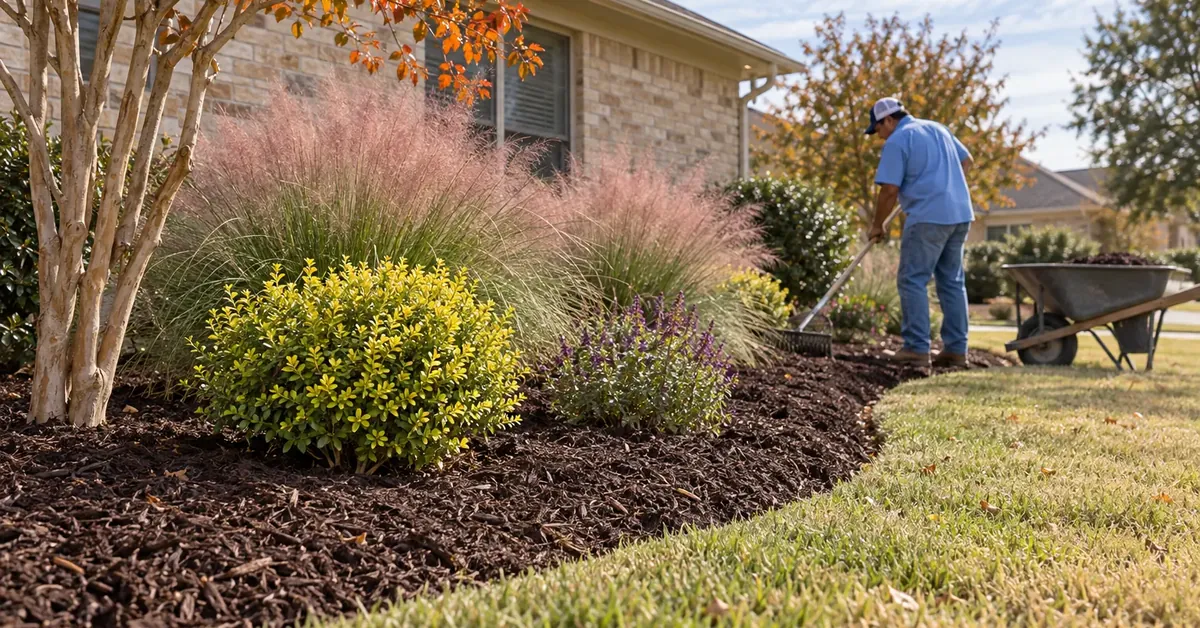
For most North Texas flower beds, shredded hardwood mulch spread 2 to 3 inches deep is a solid all-around choice. It holds moisture through summer, breaks down slowly enough to feed clay soil, and insulates roots in winter. Pull it a few inches back from stems and trunks, and November is a good time to apply.
Why does mulch matter so much in North Texas?
Our beds take a beating from both ends of the calendar. Summer sun and wind dry out bare soil fast, and our clay then bakes into a crust that water runs off instead of soaking in. Winter brings freeze and thaw swings that can heave shallow roots.
A layer of mulch evens all of that out. It slows evaporation, keeps soil temperature steadier, blocks many weed seeds from sprouting, and shields the surface from heavy rain. Over time, organic mulches also break down into the top layer of soil, which helps stiff clay loosen up.
Which mulch works best: hardwood, cedar, pine bark or shredded leaves?
There is no single winner for every bed. The right pick depends on how much slope you have, how often you want to redo the beds, and what you are growing. Here is how the common options compare for our area.
- Shredded hardwood: breaks down at a moderate pace and improves the soil. Good for most flower beds and shrub borders, though it needs a top-up every year or two.
- Cedar: breaks down slowly, so it lasts longer. Good for beds you want to redo less often, but it can mat if spread too thick.
- Pine bark (nuggets or mini): breaks down slowly. Good for formal beds and acid-loving plants, but nuggets can wash away on slopes in heavy rain.
- Shredded leaves: break down fast and feed the soil. Good for vegetable beds and informal borders, but they blow around unless shredded fine.
In short, shredded hardwood is a safe default for flower beds, cedar or bark suit beds you want to leave alone longer, and leaves are a good free option if you shred them first.
Shredded hardwood
The shreds knit together, so it stays put better than chunky mulch when a North Texas storm dumps an inch of rain in an hour. It darkens as it ages and slowly feeds the soil, which makes it a sensible starting point for general flower beds.
Cedar and pine bark
These break down more slowly, so they last longer between refreshes. The tradeoff is less soil-building. Nuggets look tidy but are light and tend to drift downhill, so keep them for flat beds or use a shredded product on slopes.
Shredded leaves
Fallen leaves are free and work well once they are chopped up, which a mower with a bag does quickly. Whole leaves can mat into a soggy layer that sheds water, so shred them first.
How deep should you spread mulch?
Two to three inches is the target for most beds. Less than two and weeds push through and the soil dries out. More than three can hold too much water against the roots, which is a real problem in our slow-draining clay.
- Annuals and perennials: about 2 inches, kept clear of the crowns so they do not stay wet and rot.
- Shrubs and roses: 2 to 3 inches, pulled a few inches back from the stems.
- Trees: 2 to 3 inches in a wide ring, with the trunk flare itself left open to the air.
A common mistake is mulch piled up against trunks in a volcano shape. It keeps bark wet, invites rot and pests, and can send roots circling up into the mulch instead of out into the soil. Spread it flat, like a donut, not a cone.
Should you mulch in November?
Yes, it is a good window. Soil is still holding some warmth, so roots keep working while the mulch layer builds up. When a hard freeze does come, the mulch buffers the soil so the temperature swings are gentler on roots.
Mulch does not make a tender plant freeze-proof. Tropicals and marginal perennials may still need a frost cloth or to be moved indoors. What mulch does is protect the root zone, which is often the difference between a plant that resprouts in spring and one that does not.
If you missed November, late winter works too. Just wait until you have cut back dead perennial growth so you are not burying old stems.
What mulching mistakes cause problems in clay soil?
- Going too deep. Four to six inches of mulch on clay can stay soggy and suffocate roots.
- Piling mulch against the house. Wood mulch can be a food source for termites, though having mulch does not by itself cause an infestation. Still, a damp layer touching siding or foundation is best avoided. Keep it a few inches below siding and pulled back from the foundation, and ask a pest professional if you have concerns.
- Layering on top of layers. Adding fresh mulch every year without checking the depth is how beds end up 6 inches deep. Measure before you add.
- Skipping the edge. A clean bed edge keeps mulch from washing into the lawn and grass from creeping in.
- Using landscape fabric under everything. It tends to get buried in mulch and soil, weeds root on top of it, and it blocks organic matter from reaching your clay.
How much mulch do you need to buy?
Measure the bed in square feet, multiply by the depth in feet, and you have cubic feet. For example, a 100 square foot bed at 3 inches deep needs 25 cubic feet. A cubic yard is 27 cubic feet, so that bed takes just under one yard, or about 13 bags of the common 2 cubic foot size.
A quick rule of thumb: one cubic yard covers roughly 100 square feet at 3 inches, or about 160 square feet at 2 inches. Bags are handy for one or two small beds, and for several large beds it helps to add up the cubic yards first so you can compare your options.
If you are not sure what is in your beds now, push a ruler down through the mulch to the soil. If you already have 2 inches, you may only need to rake and fluff it rather than add more.
Where to find mulch and get a straight answer
We are a retail garden center in Flower Mound, and picking the right mulch for your beds is a good reason to stop in. You can browse our soil, mulch and stone selection online to see what we carry. If you would like help choosing, bring a photo and your measurements and stop by. We are open Monday to Saturday 9 to 5 and Sunday 12 to 5.
Frequently Asked Questions
Does mulch attract termites in Texas?
Wood mulch can be a food source for termites, but having mulch does not by itself mean you will get an infestation. Keep mulch a few inches below siding and pulled back from the foundation. If you are worried about termites, a licensed pest professional can inspect your home.
Should I remove old mulch before adding new?
Usually not. Measure what is there, rake it to break up any crust, and add only enough to bring the total back to 2 to 3 inches. Remove old mulch only if it is matted, smells sour, or has built up past 3 inches.
Is dyed mulch safe for flower beds?
Most dyed mulches use colorants that are considered safe for plants, but quality varies by product. Ask what the mulch is made from, since the best ones are made from clean wood rather than scrap. Natural shredded hardwood is a dependable choice if you are unsure.
How often should mulch be replaced in North Texas?
Shredded hardwood typically needs a top-up every year or two as it breaks down in our heat. Cedar and pine bark last longer. Check the depth each fall and add only what is needed to get back to about 2 to 3 inches.
Can I use fallen leaves as mulch?
Yes, once they are shredded. Running a mower over them breaks them into small pieces that settle in and break down into the soil. Whole leaves can mat down and shed water, so shred them first and keep the layer to a couple of inches.