
Why Fall Is a Useful Planting Window
Fall is a practical time to add shrubs in North Texas because the most intense summer heat is easing while soil can remain warm enough for root activity. The goal is not to chase a calendar date. Plant when the selected shrub is healthy, the bed can be prepared correctly, and you can water during establishment. A good fall project gives the plant time to settle before next summer, but continued attention after planting is still essential.
Choose Shrubs by Mature Size First
The best shrubs to plant in fall in North Texas are the ones that fit the site at maturity. Start with the available width and height, then account for windows, walkways, utilities, eaves, and nearby plants. A small nursery container can hide how much space a shrub will eventually occupy. Choosing by mature dimensions reduces repeated shearing and helps each plant keep a natural shape. It also prevents a border from becoming crowded after only a few seasons. See Texas A&M AgriLife Earth-Kind Plant Selector for authoritative planning context.
Match Light and Drainage to the Plant
Observe the bed at several times of day. Full afternoon sun near a west-facing wall can be much hotter than gentle morning sun, while deep shade beneath mature trees can be dry as well as dark. Drainage matters just as much. A shrub adapted to drier soil will struggle in a low area that remains wet, and a moisture-loving selection will need more support in a raised, fast-draining bed. Right plant, right place is the central filter. Learn more about trees and shrubs.
Build Evergreen Structure
Evergreen shrubs create year-round mass and can anchor a foundation bed, entry, or property edge. Hollies, junipers, and other evergreen options vary widely in size and texture, so the category name is not enough. Compare the specific selection, mature habit, sun tolerance, and water needs. Use evergreens as a framework rather than filling every opening with the same plant. A restrained structure gives flowering shrubs and perennials room to contribute seasonal change. Learn more about Texas native plants.
Add Flowering and Seasonal Interest
Flowering shrubs can bring spring bloom, summer color, fragrance, fall foliage, or attractive stems and fruit. Decide which season needs support and how the plant will look when it is not flowering. Crape myrtles, roses, abelias, viburnums, and other familiar groups all include selections with different habits. Availability varies, so use examples as a starting point and confirm the exact plant label and growing requirements before buying. Learn more about annuals and perennials.
Consider Texas Native Shrubs
Texas native shrubs can be valuable when they are matched to the specific region and site. Native does not mean that every plant tolerates every North Texas bed or requires no care. Texas A&M AgriLife maintains a Texas Native Shrubs database, and its Earth-Kind Plant Selector can filter choices by region and characteristics. Those resources help narrow the list, while an in-person review helps connect the plant information to the actual space. Learn more about soil, mulch, and stone.
Four Shrubs to Compare for North Texas Fall Planting
No shrub is best for every bed, but these four candidates give North Texas gardeners a practical starting point. Confirm the exact cultivar, mature size, exposure, drainage needs, and current availability before buying.
Dwarf Yaupon Holly
Dwarf yaupon holly offers compact evergreen structure and works well where a low, durable foundation or border shrub is needed. Give it room for its labeled mature width rather than planning to hold an oversized selection in place through constant shearing.
Texas Sage
Texas sage brings silver foliage and seasonal flowers to sunny beds. It performs best where reflected heat and well-drained soil suit the plant, not in a low spot that stays saturated after rain or irrigation.
Glossy Abelia
Glossy abelia combines arching foliage with a long flowering season. Cultivars vary substantially in mature size and leaf color, so compare the plant label with the available space and the amount of sun the bed receives.
Turk's Cap
Turk's cap is a Texas native option for beds with partial shade, including areas beneath a higher tree canopy. Its relaxed habit and seasonal flowers fit informal layers better than tightly clipped formal hedges.
Layer the Bed for a Finished Design
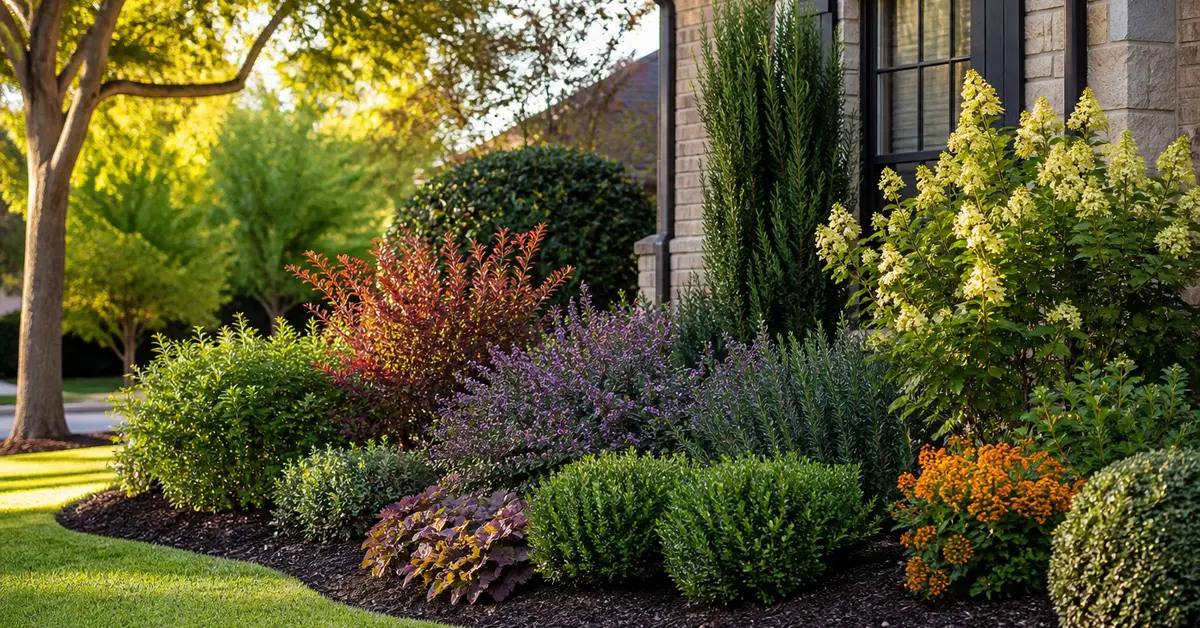
A strong shrub layout usually combines layers. Taller plants create background structure, medium shrubs establish rhythm, and lower perennials or groundcovers soften the front edge. Repeat a few plants instead of using one of everything. Repetition creates a cohesive bed, while varied foliage size and color keep it from feeling flat. Leave enough open space for maturity. Fresh mulch may make a new bed look sparse at first, but thoughtful spacing ages better. Learn more about landscape services. Additional context is available from Texas A&M AgriLife Texas Native Shrubs.
Prepare the Root Zone, Not Just the Hole
Digging an oversized deep hole is not automatically better. The root flare or crown should remain at the appropriate grade, and the surrounding soil should support outward root growth. Avoid creating a buried bowl of radically different soil that holds water around the root ball. Loosen circling roots when appropriate and backfill carefully. If the entire bed needs improvement, prepare the broader planting area instead of treating each hole as an isolated container. Learn more about visit the garden center.
Water New Shrubs Through Establishment
New shrubs need consistent watering while roots expand into surrounding soil. Frequency depends on plant, soil, weather, drainage, and container size, so fixed schedules can mislead. Check moisture at the root zone rather than judging only the surface. Rain may not wet the full root ball, especially beneath dense foliage. Reduce watering gradually as the plant establishes, but continue monitoring during warm, windy, or dry periods and through the first challenging summer.
Use Mulch Without Burying the Crown
Mulch helps moderate soil temperature and moisture, but it should not be piled against stems or the shrub crown. Spread an even layer across the bed and keep the base visible. Pair mulch with clean edging and realistic spacing for a finished look.
Shop With a Site Notes Sheet
Bring measurements, photos, approximate hours of sun, drainage observations, and the desired mature height to the garden center. Note whether the bed sits near a reflected wall, beneath trees, or along a frequently used path. These details help narrow the selection faster than choosing by flower color alone. If a shrub must stay below a window or fit a narrow side yard, write that constraint down before browsing containers.
Read the Exact Plant Label
Common plant names can cover selections with very different mature sizes and habits. Read the botanical name and cultivar when provided, then compare the label with trusted regional resources. Confirm sun, expected size, bloom period, and water needs for that exact selection. Do not assume two hollies, roses, or abelias will behave the same because they share a group name. Precision at purchase prevents avoidable crowding later.
Use a Fall Planting Checklist
Before planting, confirm utilities, spacing, grade, drainage, root-ball condition, soil moisture, watering access, and mulch. Stage every shrub in its container and view the arrangement from the street, windows, and main walk. Adjust the spacing while changes are easy. Then plant at the correct depth and document the initial watering plan. A short checklist turns a group of individual purchases into one coordinated garden project.
Plan the Next Step
Land Care Garden Center can help North Texas gardeners compare shrubs, soils, mulch, and companion plants, then connect those choices to installation support when a larger landscape project calls for professional help.
Ready to discuss the property? visit the garden center and share the goals, site conditions, and timing you have in mind.
Frequently Asked Questions
Is fall a good time to plant shrubs in North Texas?
It can be a useful planting window when heat is easing, soil is workable, and consistent establishment watering is available.
Are native shrubs maintenance-free?
No. Native plants still need the right site, establishment care, and occasional maintenance.
How far apart should shrubs be planted?
Spacing should reflect each selection’s mature width and the intended design, not only the container size at purchase.
Should mulch touch shrub stems?
No. Keep mulch spread across the bed but away from stems and the crown.