
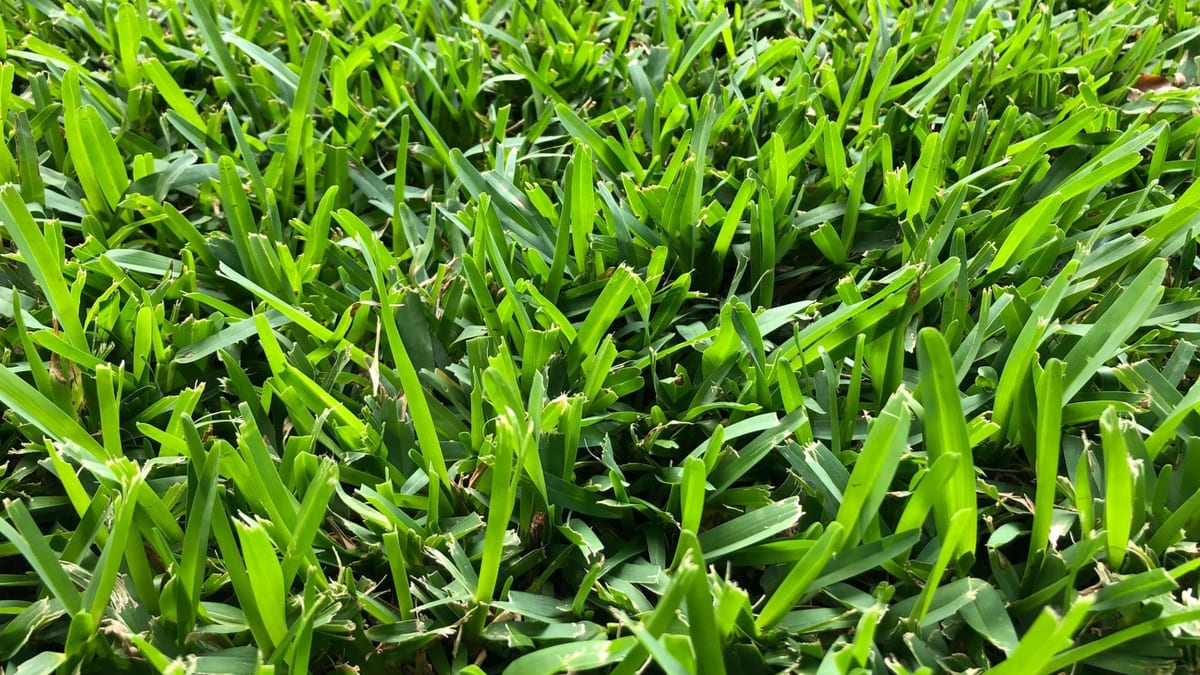
Sod is one of the few purchases where getting it wrong costs you twice: once when you buy it, and again every season you fight to keep it alive somewhere it never wanted to grow. The good news is that choosing well is mostly a matter of honest observation, and the biggest factor is sunlight.
The short answer
- Blazing full sun and a busy yard? Bermuda.
- Some trees, some shade, want it lush? St. Augustine.
- A bit of both, and you want the premium carpet? Zoysia.
- Deep shade all day? None of them, honestly. That corner wants a shade-tolerant groundcover or a mulched bed instead, and we can help with either.
The three grasses, straight up
Bermuda
The workhorse. Wants all the sun you can give it.
Sun: Needs full sun, roughly seven or more hours a day. Bermuda in shade thins out and never forgives you.
Strengths: The most drought-tolerant of the three, recovers from wear faster than anything, and handles kids, dogs, and backyard football with a shrug.
Trade-offs: It is ambitious. Expect to edge it out of flower beds, and expect regular mowing in summer since it looks best cut low and often.
St. Augustine
The shade specialist. The lush, broad-bladed classic.
Sun: The most shade-tolerant warm-season grass, getting by on four to five hours of good light. Still not a deep-shade plant.
Strengths: That thick, tropical, barefoot-friendly look, and the only real lawn answer under a moderate tree canopy.
Trade-offs: The thirstiest of the three in a hot summer, mowed taller at three to four inches, and the most sensitive to a harsh winter. Plant it in spring or summer so it is established before cold weather.
Zoysia
The premium middle ground. Dense, refined, and patient.
Sun: Happiest with five to six hours or more, tolerating light shade better than bermuda though not as well as St. Augustine.
Strengths: A dense, fine carpet that feels like a putting green underfoot, crowds out weeds once established, and grows slowly enough to cut your mowing time.
Trade-offs: That same slow growth means it establishes and repairs itself more slowly, so it rewards a little patience up front.
Side by side
| Bermuda | St. Augustine | Zoysia | |
|---|---|---|---|
| Minimum sun | 7+ hours | 4 to 5 hours | 5 to 6 hours |
| Drought toughness | Best | Needs the most water | Good once established |
| Foot traffic | Best recovery | Moderate | Durable, slow to repair |
| Feel and look | Fine blade, classic | Broad blade, lush | Dense, carpet-like |
| Mowing | Low and often | Tall, 3 to 4 inches | Least frequent |
| Winter hardiness | Very good | Most cold-sensitive | Very good |
When to lay sod in North Texas
The prime window runs from April through early fall, when warm-season grasses are actively growing and knit down fast. That said, our winters are mild enough that sod goes down successfully into early winter here, and we stock it at the yard until about mid-December. Cool-season installs just root more slowly, so keep expectations patient. The month-by-month garden calendar shows where sod fits in the bigger picture.
The first three weeks decide everything
New sod lives or dies on establishment watering. Water lightly once or twice a day for the first two weeks so the sod and the top inch of soil stay moist, then step down to deeper, less frequent watering as the roots grab. Tug a corner after two to three weeks: when it resists, the roots are in, and you can settle into a normal deep-and-infrequent schedule.