
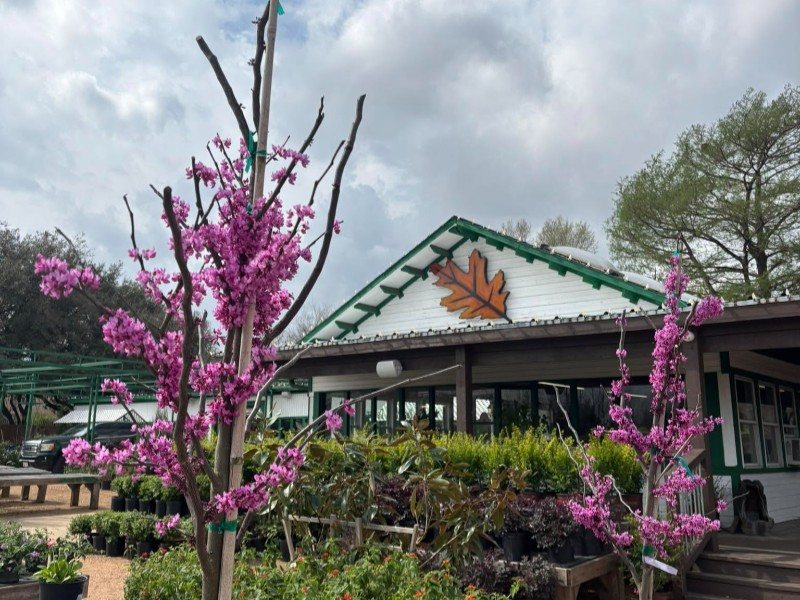
Most garden calendars are written for somewhere else. Follow a national planting guide in North Texas and you will set out tomatoes into a late freeze, prune your oaks at the worst possible moment, and wonder why your fescue melted in July.
This one is written for here: heavy clay soil, summers that test everything, a last freeze around the middle of March, and a first freeze usually in the second half of November. Bookmark it, garden by it, and when a month surprises you, come ask us in person. That is what we are here for.
January
The planning month. Quiet on the surface, busy underneath.
Plant now
- Trees and shrubs. Dormant planting lets roots establish before the heat. Winter is a genuinely good time to plant hardy stock.
- Onion transplants in the vegetable bed, mid to late January.
Do now
- Finish any oak pruning this month. From February through June, oak wilt spreads easily, so oaks should not be cut during that window.
- Prune dormant shade trees and summer-blooming shrubs. Leave spring bloomers alone or you will cut off their flowers.
- Sketch out beds and make your wish list while the yard is quiet.
February
The wake-up call. Pruning shears first, then patience.
Plant now
- Potatoes around the middle of the month, plus cool-season vegetables like broccoli and cabbage transplants.
- Trees and shrubs, still prime dormant-planting time.
Do now
- Prune roses around Valentine's Day, the classic North Texas rule of thumb.
- Prune crape myrtles properly: remove crossing and inward branches only. Never top them.
- Apply a pre-emergent to the lawn late this month to get ahead of warm-season weeds.
March
The starting gun, but a false-start month. The average last freeze is around March 15.
Plant now
- Perennials, trees, and shrubs as the soil wakes up, including Texas natives like salvia and red yucca.
- Warm-season annuals and tomatoes after mid-month, and keep frost cloth handy just in case.
Do now
- Cut back ornamental grasses and freeze-damaged perennials before new growth gets going.
- Divide crowded fall-blooming perennials.
- Refresh beds with compost and a fresh layer of mulch.
April
The best month in the North Texas garden. Plant almost anything.
Plant now
- Annual color in earnest, plus perennials, herbs, and vegetables.
- New sod, as warm-season grasses green up and soil temperatures climb. See our grass comparison guide for choosing a variety.
- Trees and shrubs, with attention to watering as things warm up.
Do now
- Give the lawn its first feeding once it has fully greened up and been mowed a couple of times.
- Mulch anything you planted this spring. Two to three inches, kept off the trunks and stems.
May
Everything is growing, including your to-do list.
Plant now
- Heat-loving color: lantana, esperanza, salvias, and other summer performers that laugh at June.
- Sod, still in its prime window.
Do now
- Train new plantings toward deep, less frequent watering now, before summer forces the issue.
- Deadhead spring bloomers and keep up with weeds while beds are still cool enough to enjoy.
June
Summer arrives for real. Mulch is your best money spent.
Plant now
- Tough summer annuals like periwinkle, purslane, and moss rose.
- Container plantings for shade, where new plants get a gentler start.
Do now
- Check that every bed has two to three inches of mulch. It is the single best defense against a Texas summer.
- Water early in the morning, and raise the mower a notch so grass shades its own roots.
July
Survival mode. The goal is to keep what you have alive, not to start projects.
Plant now
- Very little, and that is fine. Sod can still go down if you stay on top of watering.
- Start planning the fall vegetable garden on paper.
Do now
- Deep, infrequent watering beats a light daily sprinkle. Let water soak to the roots.
- Skip major pruning and fertilizing. Stressed plants do not want a haircut or a big meal.
- Check containers daily. They dry out faster than anything in the ground.
August
The turn. It does not feel like it yet, but fall starts here.
Plant now
- Fall tomatoes early in the month. It feels wrong and it works.
- Late in the month, refresh worn-out summer color.
Do now
- Walk the yard and decide where a shade tree would have saved you this summer. Fall is coming, and fall is tree-planting season. Our shade tree guide can help you choose.
- Keep watering deep, and hold the line on mulch.
September
The second spring. North Texas gardens get a whole extra season most of the country skips.
Plant now
- Trees and shrubs. Fall planting is the best-kept secret in Texas gardening: warm soil grows roots all winter while the top stays dormant.
- Fall vegetables, and wildflower seed including bluebonnets.
- Fall color like marigolds and zinnias for one more show before frost.
Do now
- Apply a pre-emergent early in the month to head off cool-season weeds.
- Divide and move spring-blooming perennials like iris.
October
Prime time. If you plant one thing all year, plant it in October.
Plant now
- Trees, shrubs, and perennials of nearly every kind. This is the month roots love best.
- Pansies, violas, and flowering kale late in the month for color that runs clear through winter.
- Garlic in the vegetable bed, and mums everywhere else.
Do now
- Buy tulip and hyacinth bulbs now and chill them in the refrigerator. In North Texas they need about six to eight weeks of cold before planting around the holidays.
- Daffodils can skip the fridge and go straight in the ground from late October.
November
Still planting weather. The first freeze usually lands in the second half of the month.
Plant now
- Trees and shrubs, still in the sweet spot.
- Winter color: pansies, violas, cyclamen, and kale.
- Daffodil bulbs, before the ground gets cold.
Do now
- Be ready to cover tender plants when the first freeze warning comes.
- Mulch-mow fallen leaves into the lawn or pile them into beds. Free soil food.
- Drain hoses and insulate faucets before the first hard freeze.
December
The wind-down, with one last window.
Plant now
- Trees and sod through mid-December. Roots keep working in our mild early winter, and it is how we plant here at the yard too.
- Chilled tulip and hyacinth bulbs, late in the month.
Do now
- Protect tender plants through freezes: water before a hard freeze, cover with cloth, uncover after.
- Top up mulch one last time and enjoy the evergreens and berry-loaded hollies carrying the yard through winter.
- Put your feet up. January's planning month is around the corner.