
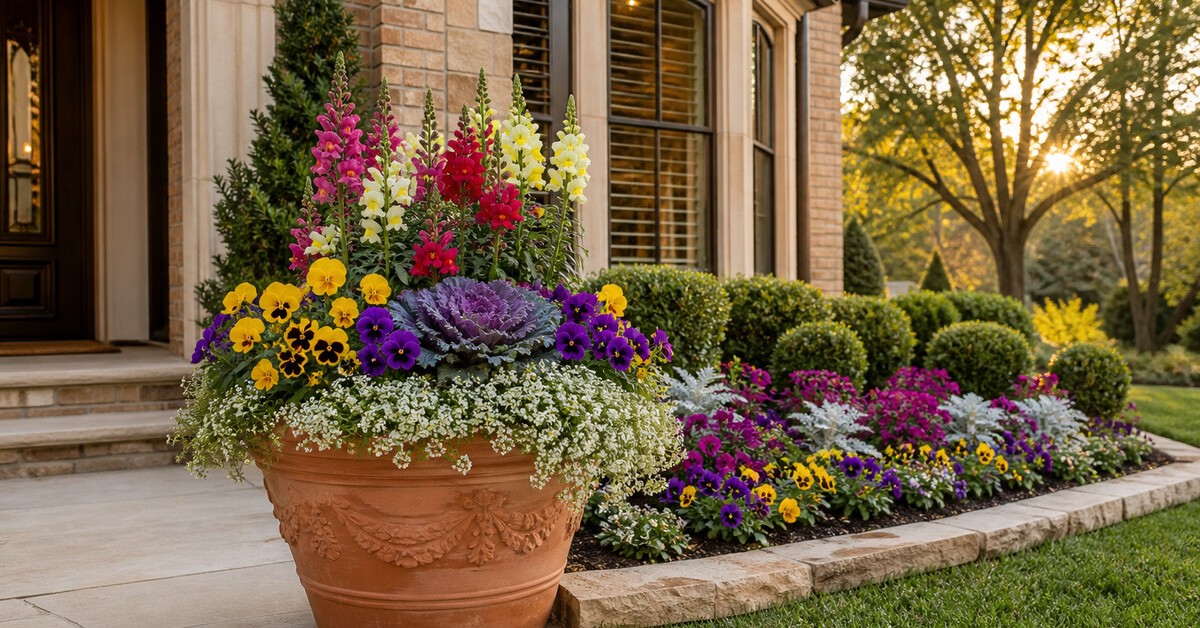
August in North Texas is a strange time to think about fall flowers. The lawn is still bright with summer sun, containers dry quickly, and the first cool morning can feel weeks away. Still, this is the right time to plan. A little preparation now makes it easier to refresh beds and pots when the weather finally turns.
The best fall flowers for North Texas are not simply the plants with autumn colors. They are cool-season performers suited to our long, uneven transition from heat to cold. The key is choosing plants for your actual light, waiting for sustained cooler weather, and building combinations that still look intentional after one variety pauses between bloom cycles.
Plant by the weather, not a date
Our North Texas garden calendar treats September as a second spring, but the thermometer gets the final vote. Cool-season annuals can struggle if they go into hot soil too early. Use late August to clean containers, check drainage, measure beds, and decide on a color palette. Plant after the strongest summer heat eases and the forecast shows a more consistent cooling trend.
Do not assume every part of the yard has the same schedule. A west-facing porch pot may stay hot long after a bed with morning sun is comfortable. Large masonry planters also hold heat differently from small pots. Read the tag for each plant, observe the site, and check the forecast before you plant.
Nine cool-season picks worth knowing
Selection changes through the season, so think of this as a design menu rather than an inventory promise. When you visit our annuals and perennials tables, we can help you compare the plants currently available for your light and container size.
1. Pansies
Best for bold color in sun
Pansies bring large, recognizable flowers in nearly every useful garden color. They work well in broad sweeps at the front of a bed and as the main color block in containers. Their faces read clearly from the street, which makes them especially effective near walkways and entries.
2. Violas
Best for abundant smaller blooms
Violas have smaller flowers than pansies but often create a softer, more detailed look. Use them to edge a container, fill gaps around upright plants, or weave two related colors through a bed. Their scale also suits window boxes and smaller porch pots.
3. Snapdragons
Best for height and structure
Snapdragons supply the vertical line that many fall combinations lack. Short varieties can sit in the middle of a bed, while taller selections belong behind lower flowers or at the center of a large pot. Pair them with rounded pansies or trailing alyssum so the arrangement has more than one shape.
4. Dianthus
Best for a tidy middle layer
Dianthus forms compact mounds with crisp flowers, often in white, pink, red, or mixed tones. It is a useful bridge between tall snapdragons and low edging plants. Because varieties differ, check the mature size on the tag before placing it at the front of a bed.
5. Sweet Alyssum
Best for soft edges and trailing texture
Sweet alyssum creates a low cloud of small flowers. In containers, let it spill over the rim. In beds, use it along a path or around bolder plants where its fine texture can soften hard edges. Give it enough room for airflow rather than packing every opening on planting day.
6. Ornamental Kale or Cabbage
Best for a durable foliage focal point
These cool-season foliage plants add broad rosettes of green, cream, pink, or purple. One can anchor the center of a low bowl, or several can repeat through a bed. They are valuable because the arrangement keeps color and form even when surrounding flowers are between flushes.
7. Dusty Miller
Best for silver contrast
Dusty miller is grown for its pale, textured foliage. The silver tone separates strong colors and keeps purple, red, or yellow flowers from blending into one mass. Use it sparingly as a repeating accent, then leave enough space for neighboring plants to reach their labeled size.
8. Stock
Best for upright blooms and fragrance
Stock adds another vertical option with clustered flowers and a noticeably different texture from snapdragons. It fits cottage-style beds and mixed containers where you want height without a rigid look. Place it where you can enjoy it up close, then use shorter flowers to cover the base.
9. Cyclamen
Best for sheltered, shadier color
Cyclamen offers bright flowers above patterned leaves and is a useful option when a protected porch or shaded bed needs cool-season color. It has different exposure and cold-protection needs from a sunny pansy bed, so treat it as a site-specific choice and follow the plant label closely.
Build a fall container in three layers
A good container does not need a dozen plant types. Start with one upright element, add a full middle layer, and finish with something low at the edge. For example, combine snapdragons, pansies, and sweet alyssum. For a foliage-first design, use ornamental kale with violas and a small amount of dusty miller.
Choose the container before calculating plant quantities. Our pottery and garden decor collection includes different shapes and materials, and every planted pot needs an open drainage hole. A wide bowl suits a low rosette and edging flowers. A taller pot can visually support snapdragons or stock.
Prepare the roots for North Texas conditions
For containers, begin with fresh, quality potting mix rather than native clay or soil dug from a bed. Fill the pot so water can reach the mix without running straight over the rim. After planting, water thoroughly and confirm that water exits through the drainage hole.
In established beds, loosen compacted soil and add organic matter according to the bed's condition rather than creating a rich pocket around each plant. A light mulch layer can reduce soil splash and moderate moisture, but keep it away from plant crowns. Our soil and mulch department can help you choose materials for a bed or container project.
Water according to the soil, the weather, and the container size. Newly planted roots need consistent moisture, but cool-season plants do not benefit from sitting in saturated soil. Check with a finger before watering, aim at the soil rather than the flowers, and remember that a small porch pot can dry faster than a broad ground bed.
Make room for the longer garden
Seasonal color is only one layer of a North Texas landscape. If you want structure that remains after the annuals are replaced, combine pots and front-edge color with shrubs, grasses, or Texas native plants selected for the site. The annual display can change while the permanent planting keeps the bed grounded.
Frequently asked questions
When should I plant fall flowers in North Texas?
Wait for sustained cooler weather rather than planting by a fixed date. Use August to plan and prepare, then plant cool-season flowers after the strongest summer heat eases. Check the local forecast because North Texas timing changes from year to year.
What fall flowers handle full sun in North Texas?
Pansies, violas, snapdragons, dianthus, stock, and sweet alyssum are common cool-season choices for sunny beds and containers. Match each plant to the light shown on its tag and adjust placement if nearby trees or buildings change the sun pattern.
Which fall flowers work in North Texas containers?
Try a tall snapdragon or stock for height, pansies or dianthus for a full middle layer, and sweet alyssum to trail over the rim. Ornamental kale or dusty miller can add foliage contrast. Always use a pot with an open drainage hole.
Do I need to cover fall flowers during a freeze?
Cold tolerance varies by plant and by the severity and duration of the freeze. Check the plant label and the forecast, water appropriately before a cold event, and use breathable frost cloth when protection is recommended. Move portable containers to a sheltered spot when practical.
Plan now, plant when the weather agrees
A North Texas fall garden rewards patience. Choose the site, prepare the pot or bed, and keep a short list of plants that can play different roles. When cooler weather settles in, you will be ready to build color with purpose instead of grabbing whatever fits in the cart.
See what is on the tables by planning a visit to our Flower Mound garden center, or call (972) 992-1660 before a special trip. Selection and hours change with the season, so check our Google listing for current hours.